Ophthalmic World Leaders
How Eyecare Leaders Are Weathering the New Normal
If leading in today's eyecare industry feels like navigating an uncharted storm, you are not alone.
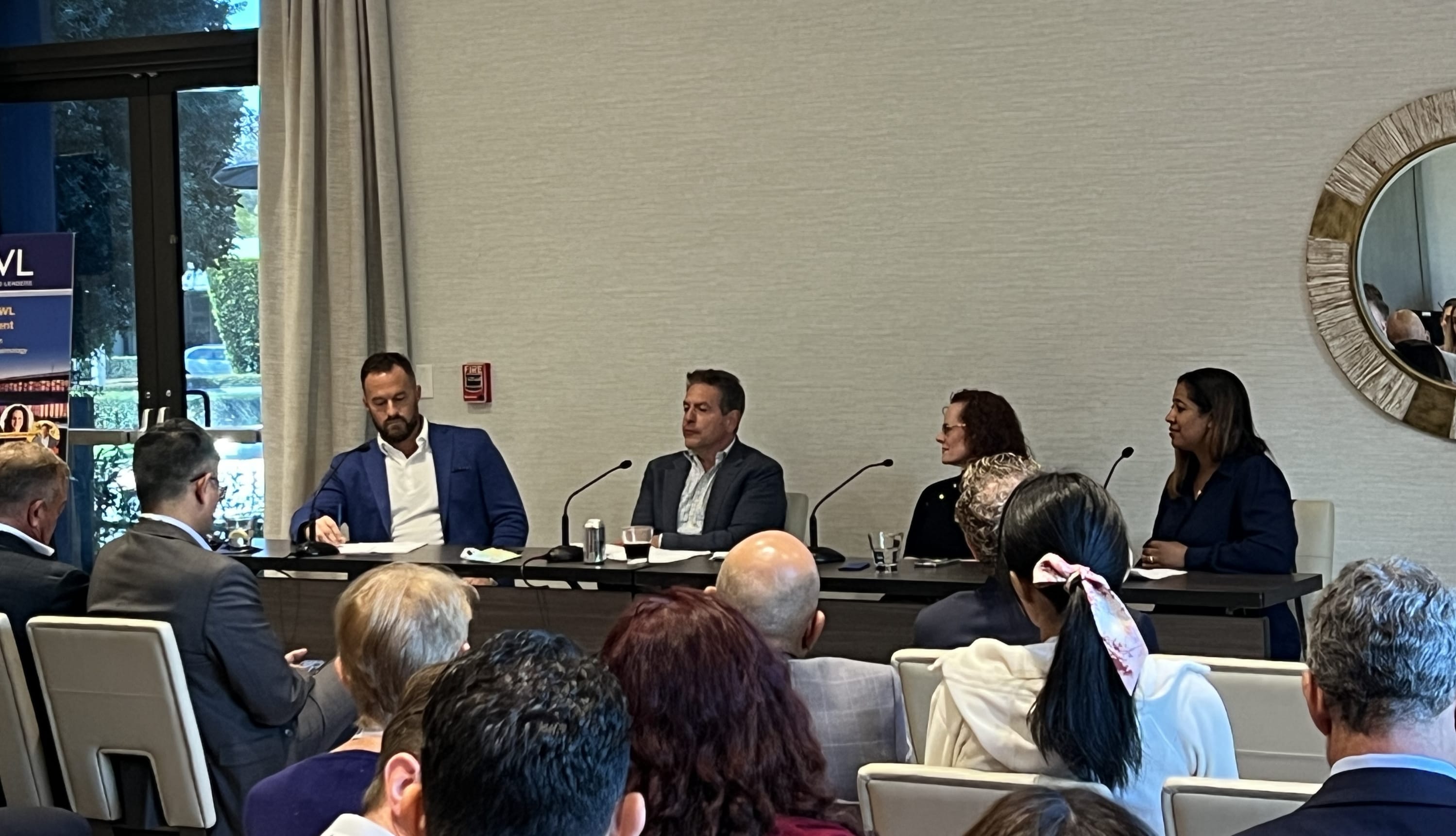
Finding clarity amidst this chaos was the core theme at the recent OWL SoCal Chapter panel held alongside Octane’s 2026 Ophthalmology Tech Forum meeting, which offered a masterclass in resilience for anyone looking to level up their leadership game.
Stepping in at the last minute, Maaza Martin expertly guided three industry powerhouses through a discussion, starting with reminding us all that uncertainty can feel disruptive — but it can also create the greatest opportunities for innovation, collaboration, and leadership. Margot Goodkin, MD, PhD, Ramin Valian, and Adam Szaronos delivered actionable advice for leading through the unknown.
Adam Szaronos on Redefining the Storm
When tackling the unexpected, Adam Szaronos offered a relieving perspective. He explained that leaders often pressure themselves to eliminate uncertainty, which is impossible because it affects everyone equally. Instead, his goal is eliminating ambiguity.
Adam shared an analogy from a recent meeting, reminding his team that "we didn't build a ship to sit in the harbor" and that they are expressly built for the storm. By clearly defining corporate strategy and knowing exactly what the team will say no to, leaders provide a safe framework even in rough waters.
He also grounded the artificial intelligence conversation, cautioning against chasing flashy trends and advising teams to focus on unglamorous, predictive data mining to solve real inefficiencies. As he aptly put it, AI is not the overarching strategy but simply a tool, meaning we must first ask, "what are the problems we're trying to solve for right now?" before implementing new technology.
Margot Goodkin on Leading with Vulnerability
Building on Adam's focus, Margot Goodkin emphasized the human elements required to lead effectively.
True leadership demands complete transparency because people must feel seen before following you into the unknown. Margot captured this perfectly, declaring, "I will work myself to the bone for you if I know that I can trust you and that you see me".
Confronting her own reservations about artificial intelligence, she had attended a specialized Codathon to "really get to know AI better". This curiosity helped her reframe AI from a threat into a practical tool for synthesizing clinical data, while recognizing that human nuance remains irreplaceable.
Margot’s journey is a great reminder that staying relevant means staying intensely curious and welcoming feedback.
Ramin Valian on Shared Ownership and Adaptability
Ramin Valian brought incredible insight into the emotional intelligence required for organizational shifts.
After transitioning from working for a corporate powerhouse to a startup, he noted that leaders often underestimate their team's capacity for change. Weathering these shifts is never a solo endeavor because "leadership is a two-way street" and no one has all the answers.
He stressed that collective problem-solving is essential, warning that "it's a lonely journey if you're gonna do it by yourself". Showing immense strength through vulnerability, he admitted to relying on his new team to navigate his own sudden shift away from a corporate safety net.
For Ramin, the key to career growth is having the confidence to take on uncomfortable roles and building a peer network to call upon, reassuring the audience that he is always just "one phone call away from getting someone who's gonna help".
The Big Pharma Safety Net vs. Startup Stakes
During the session’s Q&A, audience member and OWL Board member Dr. Jai Parekh asked how leading at massive corporate powerhouses prepared the panelists for the high-stakes environment of startups.
Ramin Valian responded that while the corporate safety net is gone and "you're waking up thinking about making payroll," the core "principle of problem solving" remains exactly the same. He pointed out that a startup's small size means "everybody's focusing on the same problem," making a lean team incredibly productive.
Adam Szaronos added that large companies use diversification as a hedge against the unknown, whereas startups require making a "very focused bet". He agreed with Ramin, noting that "it's easier to galvanize a team around a single problem".
Margot Goodkin summarized the reality of this transition. She admitted that while it is "anxiety provoking to be flying without a net," that risk is exactly "where the fun comes in". She reminded the audience that taking these leaps means "you're doing something so incredibly novel that you're gonna change the game".
Grateful for Real World Perspectives
A massive thank you to our brilliant panelists, our agile moderator Maaza Martin, and the dedicated OWL SoCal Chapter committee for orchestrating this meaningful gathering. Special gratitude goes to Octane for hosting us in a wonderful space, and to every attendee who brought their authentic selves and thoughtful questions.
Together, we are innovating the future of ophthalmology.